Using bosu ball, swiss ball and uneven surface exercises to improve athletic performance
Training with balance balls and uneven surfaces offers a number of benefits. Here are some of the main benefits:
1. Improved stability and balance
Training on unstable surfaces activates the muscles of the abdomen, back and legs, which leads to better stability and control of the body. This is especially important in sports where balance is key.
2. Strengthening of small muscle groups
Exercises on balance balls and uneven surfaces work to strengthen the deep stabilizers and small muscles that play an important role in maintaining proper posture and preventing injury.
3. Improved coordination
Exercises that require balance switching and movement control improve coordination between different muscle groups. This is essential for a successful and safe performance.
4. Enhanced proprioception
Proprioception is the ability of the body to recognize the location of different parts of it in space. Training on unstable surfaces increases proprioceptive sensitivity, which improves response to changing terrain conditions.
5. Preventing injuries
Strengthening the main muscle groups and improving stability contribute to reducing the risk of sports-related injuries such as sprains, strains and muscle strains.
6. Improved strength and endurance
Balance ball workouts involve working with your own body weight, which strengthens muscles and increases overall strength and endurance. This is especially useful for dealing with long and intense training sessions and competitions.
7. Functional movements
Training on balance balls and uneven surfaces often mimics the functional movements that athletes perform on the field. This helps to better adapt the body to the conditions of the respective sport.
Here are some of the most used devices for training on an unstable surface.
1. Bosu Ball:

The bosu ball is half a ball attached to a flat base that provides an unstable surface for various types of exercises.
Popular bosu ball exercises:
• Squats: Standing on the bosu ball with the flat side up, squats challenge the leg and abdominal muscles while also training balance.
• Push-ups: Placing the hands on the bosu ball creates instability that activates the shoulder, chest and abdominal muscles.
• Single leg balancing: Helps strengthen the ankles and knees, which is useful for athletes in sports such as football, basketball and tennis.
2. Swiss ball:
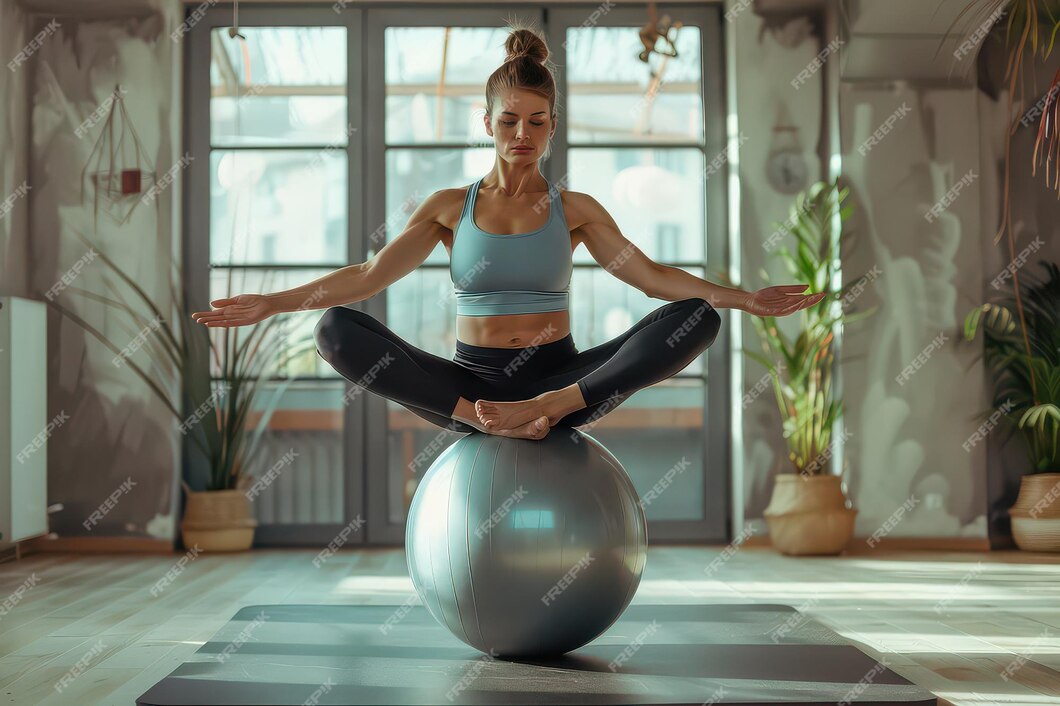
The Swiss ball, or fitness ball, is a large inflatable ball that is used for a number of exercises. Its main characteristic is instability, which forces the muscles to work hard to maintain balance.
Benefits of Swiss Ball Training:
• Increase muscular endurance: Many Swiss ball exercises can be performed for duration, which develops muscular endurance. • Development of mobility and flexibility: The ball helps stretch different muscle groups.
• Improve posture.
Since the workouts require constant core activity, this leads to better posture and strengthening of the spine. Popular Swiss ball exercises:
• Abdominal presses: Performed on the ball, these presses activate more muscles than traditional floor presses.
• Hyperextensions: Support strengthening of the lower back and hamstrings.
• Plank with feet on the ball: Increases the difficulty of the classic plank and activates the musculature of the body.
3. Exercise on uneven surfaces:

Challenges and benefits Unstable surfaces such as fitness mats, soft mats and specialized platforms also play an important role in developing muscle strength and stability.
Working on uneven surfaces stresses and strengthens the joints, which reduces the risk of injury.
• Improve reactivity: Unsteady exercises train quickness of reaction, which is key in sports where rapid changes of direction are required. Examples of exercises:
• Crawling and quadrupedal movements: These develop whole body coordination and stability.
• Plyometric exercises on a soft mat: Jumpy and dynamic movements that stimulate muscles and train athletic explosiveness.
Conclusion
Training with balance balls and uneven surfaces offers a variety of benefits that prepare the body for intense training and competition loads, improving balance, stability, strength and coordination. Integrating these exercises into your training program will help improve performance and reduce the risk of injury.